


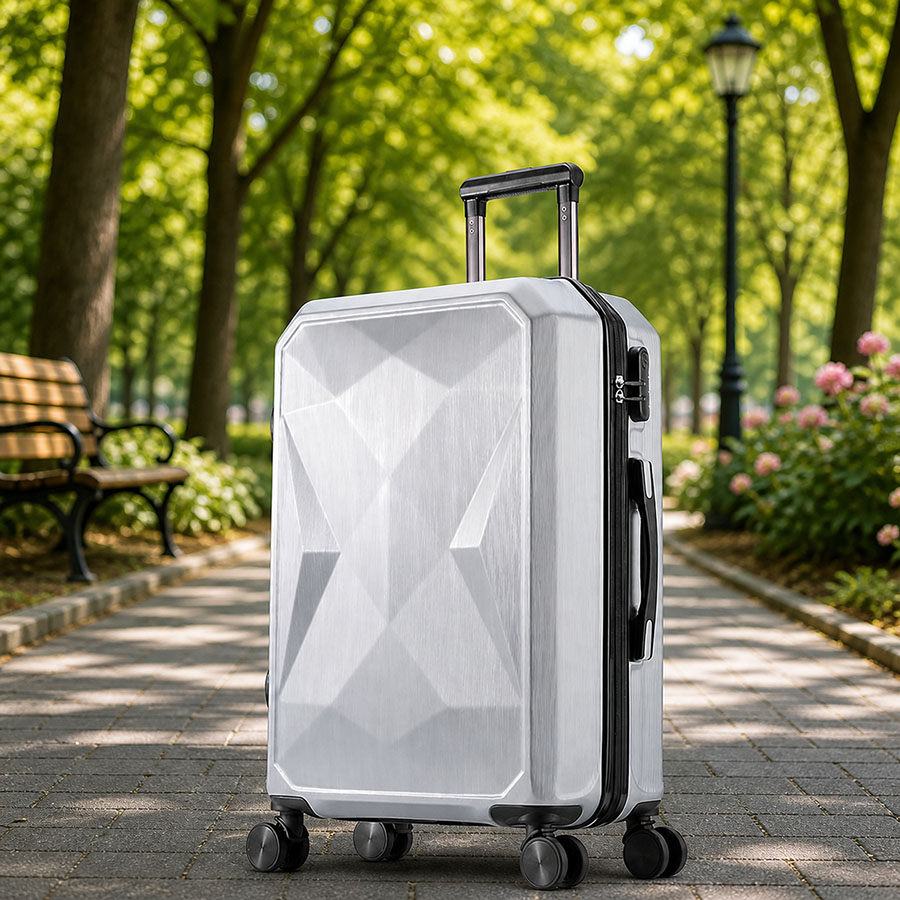
.png "Durable Lightweight Spinner Luggage")




Luggage Pre-Production Checklist: 11 Details B2B Buyers Should Confirm Before Mass Production
A good sample does not automatically guarantee good mass production.
For luggage brands, importers, wholesalers, distributors, and private-label buyers, the period between sample approval and mass production is one of the most important stages of the sourcing process.
A suitcase may look right in photos and perform well during sample evaluation. But if details such as material, color, wheels, trolley handles, zippers, locks, interior construction, logos, or packaging remain unclear, small misunderstandings can become much larger problems once production begins.
This is why buyers working with an OEM hard shell luggage manufacturer China should establish a clear pre-production confirmation process.
The objective is simple:
Turn an approved sample into a clearly defined production standard that both the buyer and manufacturer understand.
Here are 11 details B2B luggage buyers should confirm before giving the final approval for mass production.
1. Lock Down the Final Approved Sample
The approved sample should become an important physical reference for production.
Before signing off, review the complete suitcase rather than focusing only on appearance.
Check:
Overall dimensions and weight
Shell material
Color and surface finish
Wheel design and performance
Trolley handle
Carry handles
Zippers and zipper pulls
Lock
Interior lining and compartments
Expansion function, if applicable
Logo and branding
Accessories
Packaging and labels
If changes are made after the first sample, record them clearly and make sure the revised version—not an earlier sample or specification—is used as the final production reference.
The goal is to remove one dangerous phrase from the production process:
“I thought you meant…”
2. Define Shell Material, Surface Finish, and Color
The shell is one of the most visible elements of hard-shell luggage and can strongly influence weight, appearance, and market positioning.
When sourcing from a polycarbonate suitcase supplier, buyers should clearly define the agreed material requirements rather than assuming that all hard-shell luggage specifications are the same.
Surface treatment should also be confirmed.
Depending on the product concept and target market, different finishes can create very different visual identities. At Jiangxi Travel Luggage Factory, available options can include matte, glossy or mirror-style, and special-texture surface treatments.
Color deserves the same level of attention.
A color displayed on a computer or mobile screen may not perfectly represent the physical result. If accurate color matching is important to your brand, use an agreed physical color reference or approved sample whenever possible.
3. Test the Wheels—Not Just Their Appearance
Wheels are among the most frequently used components of a suitcase.
They may occupy only a small part of the overall design, but travelers can immediately notice whether a suitcase rolls smoothly and whether the wheels create unnecessary noise.
Before mass production, confirm:
Wheel style and color
Wheel size
Single or double-wheel configuration
Directional movement
360-degree rotation, where applicable
Rolling smoothness
Noise performance
Compatibility with the overall suitcase design
Do not evaluate the wheels only while the suitcase is empty.
Where possible, test the approved sample under a realistic load and through straight movement, turns, and repeated direction changes.
At Jiangxi Travel Luggage Factory, our experienced craftsmen pay particular attention to details such as wheel quietness and smooth operation.
4. Check Trolley Handle Operation
The trolley handle is another component that travelers interact with repeatedly.
Before production, check whether it extends and retracts smoothly and whether its appearance, height, color, and configuration match the approved specification.
Carry handles should also be reviewed for position, appearance, and consistency with the overall luggage design.
These details may look minor on a specification sheet, but they can have a significant influence on perceived product quality.
Our experienced workers, including craftsmen with more than 10 years of industry experience, pay close attention to details such as trolley-handle smoothness during manufacturing.
5. Finalize Zippers and Expansion Features
For buyers working with a zipper luggage factory, zipper specifications should be confirmed before production rather than left open to interpretation.
Depending on the design, confirm details such as:
Zipper type
Zipper color
Zipper pulls
Opening direction
Expansion zipper
Related branding or decorative details
If the suitcase is expandable, confirm how the expansion section is incorporated into the design and make sure the approved sample reflects the intended final construction.
A small change to a zipper or expansion detail can influence both appearance and functionality, so these decisions should be settled before the production line begins.
6. Confirm Locks and Other Functional Components
Locks are another visible and functional part of many luggage collections.
Confirm the agreed:
Lock style
Lock color
Position
Required functionality
The same approach should be applied to other functional and decorative components.
As customization increases, maintaining a clear component list becomes increasingly important.
The buyer, production team, and QC team should all be referring to the same approved component specification.
7. Review the Interior Like the End Customer Will
The exterior attracts attention first, but the interior determines much of the everyday packing experience.
Open the suitcase and inspect:
Lining material and color
Divider layout
Interior zipper compartments
Packing straps
Stitching
Interior branding
Available packing space
Overall workmanship
For multi-size luggage sets, do not automatically assume that every size should use exactly the same internal arrangement.
This becomes particularly relevant when working with a checked luggage OEM factory, as larger checked luggage may have different packing and structural requirements from smaller carry-on cases.
Review every size that matters to the collection.
8. Finalize Logo and Private-Label Details
For private-label projects, branding should be confirmed before mass production—not during it.
Review:
Final logo artwork
Logo dimensions
Color
Position
Application method
Interior branding
Customized zipper pulls, where applicable
Hangtags and labels
Branded packaging
When working with a custom suitcase manufacturer, these details are especially important because you are not simply purchasing a generic suitcase.
You are creating a physical product that will represent your brand in the market.
Make sure the production team is using the latest approved artwork. An outdated logo file or incorrect position can turn an otherwise acceptable production run into a serious branding problem.
9. Approve Packaging, Labels, and Shipping Marks
Product confirmation should not stop with the suitcase.
Packaging mistakes can create unnecessary problems for warehousing, distribution, retail preparation, or e-commerce fulfillment.
Before packing begins, confirm requirements such as:
Product protection
Polybag or other individual packaging, if required
Carton configuration
Carton markings
Product labels
Barcodes
Hangtags
Packing method
Customer-specific packaging requirements
For importers and distributors, these details are part of the product specification—not an afterthought.
10. Turn the Approved Product Into a Written Specification
One of the most useful steps before mass production is converting all approved details into a clear written reference.
A practical specification sheet might follow this structure:
Model → Size → Material → Color → Finish → Wheels → Trolley → Handles → Zippers → Lock → Interior → Logo → Accessories → Packaging
Add photos, drawings, or approved reference images where they make the specification clearer.
Most importantly, control revisions.
If a wheel, color, zipper, logo position, or other component changes after sample review, both buyer and manufacturer should know which version is final.
This becomes especially important for collections containing multiple sizes, colors, or styles.
The approved sample shows what the product should be. The final specification helps production repeat it consistently.
11. Agree on Quality Expectations Before Production
Quality control should not begin when finished cartons are already waiting for shipment.
Buyer expectations should be clear before production starts.
At Jiangxi Travel Luggage Factory, our quality approach includes incoming raw-material control, 100% inspection throughout production processes, and sampling inspection before shipment.
This helps create multiple opportunities to identify issues during manufacturing rather than relying only on the final stage.
For B2B buyers, clearly defined requirements also provide a stronger reference for subsequent quality inspection.
The objective is not simply to make one good sample.
It is to support consistency from the approved sample to production—and from one production order to the next.
A Simple 3-Stage Pre-Production Approval Process
For buyers working with an OEM hard shell luggage manufacturer China, the confirmation process can be organized into three practical stages.
Stage 1: Specification Confirmation
Define the measurable and visible requirements:
Size + material + color + finish + components + interior + branding + packaging
Stage 2: Physical Sample Approval
Evaluate what cannot be understood from a specification sheet alone:
Appearance + wheel performance + trolley operation + functionality + workmanship + overall product experience
Stage 3: Final Production Confirmation
Record all revisions made during sample development and make sure the final sample and final specification represent the same product.
This creates a much clearer answer to the most important pre-production question:
What exactly are we producing?
Why Manufacturing Flexibility Matters for Custom Luggage Projects
Not every luggage buyer follows the same purchasing strategy.
An established importer may require larger-volume production of a proven collection.
A growing brand, on the other hand, may want smaller quantities across several styles or colors to test market response before scaling.
This is where manufacturing flexibility becomes valuable.
Since 2018, Jiangxi Travel Luggage Factory has focused on zipper luggage manufacturing and can support both larger-volume orders and small-batch, multi-style customization while maintaining attention to quality consistency.
For B2B customers, this flexibility can help when:
Testing new product concepts
Launching multiple colors
Developing different styles
Entering a new market
Expanding an existing luggage collection
Scaling a successful product into larger production
A professional custom luggage manufacturer should not only understand how to produce luggage, but also how different customers may need to develop and scale their collections.
How Should You Evaluate a Luggage Manufacturing Partner?
Price matters, but the lowest quotation does not answer every sourcing question.
Before choosing a manufacturing partner, ask:
Can the factory clearly understand and document our customized specifications?
How are raw materials and production processes controlled?
Can the factory support the surface finishes and styles required by our brand?
How are user-experience details such as wheel quietness and trolley-handle smoothness handled?
Can the factory support our current order quantity—and future growth if the product succeeds?
The answers can reveal more about long-term cooperation potential than price alone.
Why Work With Jiangxi Travel Luggage Factory?
Since 2012, Jiangxi Travel Luggage Factory has focused on zipper luggage manufacturing for customers who value product quality, manufacturing flexibility, and long-term cooperation.
We select high-quality imported raw materials with attention to lightweight, strong, and resilient shell performance.
Our available surface treatments include matte, glossy or mirror-style, and special textures to support different product and brand positioning.
Experienced craftsmen pay particular attention to practical details such as quiet wheel performance and smooth trolley-handle adjustment.
Our production approach also includes incoming raw-material control, 100% inspection throughout production processes, and sampling inspection before shipment.
With flexible manufacturing capabilities, we can support both larger orders and small-batch, multi-style customization.
Our purpose is not simply to manufacture another suitcase.
It is to continuously create value for our customers and help turn their brand concepts into reliable luggage products.
Ready to Move Your Custom Luggage Project Into Production?
Successful mass production begins before the production line starts.
The more clearly the sample, specifications, components, branding, packaging, and quality requirements are defined, the easier it becomes for both buyer and manufacturer to work toward the same result.
If you are developing a new OEM or private-label luggage collection, send us your:
Reference photos + target sizes + material requirements + colors + component preferences + logo requirements + packaging needs + expected order quantity.
Jiangxi Travel Luggage Factory can discuss your project with you from sample development and customization through production and quality control.
Because in custom luggage manufacturing, one of the best ways to reduce problems during production is simple:
Confirm the details before production begins.
READ MORE:
How to Reduce Carry On Luggage Wheel Noise: A B2B Buyer’s Guide to Quieter Suitcases
Durable & Lightweight Luggage: What B2B Buyers Should Look for in a 3 Piece Hard Shell Luggage Set
Jiangxi Travel Luggage and Leather Goods Manufacturing Co.Ltd.
Justin Huang(Executive Manager)
Mob./ WhatsApp / Wechat: +86 138 19731968
Email: justin@justtravelluggage.com
Website: www.justtravelluggage.com
https://youtube.com/@boss_luggage_factory?si=hSPCzhqYHvDezlKK
http://linkedin.com/in/志军-黄-5b610b126
https://www.instagram.com/45.2513980/
https://www.facebook.com/profile.php?id=61582051708703&sk=reels_tab
https://www.pinterest.com/Travelluggage001/
.png "Expandable trolley case")
Company Name:
Jiangxi Travel Luggage And Leather Goods Manufacturing Co.Ltd
Tel: +86 13819731968
E-mail: justin@justtravelluggage.com